• Skip to primary navigation
  • Skip to main content
  • Skip to primary sidebar

DianaHale

  • HOME
  • ABOUT
  • BLOG
  • CONTACT

Inspiring Entrepreneurs

Learning to Code

Posted on 05.04.18 | dianahhale |

About six years ago, I taught myself WordPress, and was ecstatic when I was able to create my very first website!

I never dreamed that I would go on to learn HTML, CSS, Java, and Ruby on Rails. Who inspired me to learn computer code? A most unlikely candidate.

Karlie Kloss is an entrepreneur who has been modeling professionally since she was discovered at age 13. Karlie has worked in campaigns for top designers, including Victoria’s Secret, Calvin Klein, Versace, Dior, and Louis Vuitton. She has been recognized for her entrepreneurship and philanthropic work on Time Magazine’s 100 Most Influential People list.

Karlie became interested in technology after meeting entrepreneurs who were building tech businesses through coding. She wanted more young women to get into computer coding, calling it a “creative, artistic expression”.

Karlie’s personal passion for coding led her to launch a nonprofit that empowers young women to code and become leaders in the tech industry. Her Kode with Klossy coding program has expanded to 50 summer camps in 25 cities across the United States. This year it will train over 1,000 students.

If these young girls could learn computer code, I was sure I could. I decided to give coding a try, and I am glad I did. It opened a whole new world for me.

You can learn to code too! Check out Lynda.com for a huge selection of courses, no matter what your skill level is.

Ray Dalio’s Principles

Posted on 04.11.18 | dianahhale |

Ray Dalio PrinciplesRay Dalio is the founder and chair of BridgeWater Associates, the largest and most successful hedge fund in the world.  It manages $150 billion in assets globally.

I loved his TED Talk in April 2017.  and recently heard him interviewed on one of my favorite podcasts, The James Altucher Show.

Now that he has built a personal net worth of over $17 billion, Ray has turned his attention to helping others. In his new book, Principles, he outlines the formula he used to guide his company to massive success. It is a hefty tome of almost 600 pages, but well worth the time it takes to read it. I have summarized the major points below.

Life Principles

  1. Embrace reality and deal with it. – Be a hyper realist. Adapt through trial and error. Evolve. Weigh the consequences. Own your outcomes.
  2. Use the 5-step process to get what you want out of life. – (1) Have clear goals. (2) Identify problems and refuse to tolerate them. (3) Be radically open-minded. (4) Understand that people are wired differently. (5) Learn how to make decisions effectively.
  3. Be radically open-minded. – Sincerely believe that you might not know the best possible path. Your ability to deal with “not knowing” is more important than what you do know.
  4. Understand that people are wired very differently. – Getting the right people in the right roles in support of your goal is the key to succeeding at whatever you choose to accomplish.
  5. Learn how to make decisions effectively. – Recognize that (1) the biggest threat to good decision making is harmful emotions, and (2) decision making is a two-step process (first learning and then deciding).

Work Principles

To Get the Culture Right . . .

  1. Trust in radical truth and transparency ­– You have nothing to fear from knowing the truth. Have integrity and demand it from others. Be radically transparent.
  2. Cultivate meaningful work and meaningful relationships – Be loyal to the common mission. Be crystal clear about what the deal is. Treasure honorable people who are capable.
  3. Create a culture in which it is okay to make mistakes, and and unacceptable not to learn from them – Recognize that mistakes are part of the evolutionary process. Know which types of mistakes are acceptable, and which types are unacceptable.
  4. Get and stay in sync – Recognize that conflicts are essential to great relationships. Know how to get in sync and disagree well. If you find you can’t reconcile major differences, consider whether the relationship is worth preserving
  5. Believability-weight your decision making – Listen to everyone, but give greater weight to those with demonstrably more knowledge and success. Find the most believable people possible who disagree with you and try to understand their reasoning. Understand how people came by their opinions.
  6. Recognize how to get beyond disagreements – Use your principles to guide your resolutions. Don’t resolve crucial matters through compromise. Seek the best solutions by using principles-driven decision-making, but then expect everyone to get behind decisions once made.

To Get the People Right . . .

  1. Remember that the ‘who’ is more important than the ‘what’ – Determine who will take responsibility. Choose the right people; hold them accountable.
  2. Hire right, because the penalties for hiring wrong are huge. – Match the person to the design. Remember that people are built very differently and that different ways of seeing and thinking make people suitable for different jobs. Don’t hire people just to fit the first job they will do; hire people you want to share your life with.
  3. Constantly train, test, evaluate and sort people – Move people around, assess them, and give them feedback. Stretch them through trial and error to learn what they do best and under what conditions. Know their strong and weak points. Develop and place them accordingly. Remove people who fail to perform.

To Build and Evolve Your Machine . . .

  1. Improve management of your machines – The better you know your systems, the more easily you can diagnose issues and solve them. Gauge your machines’ health by their outputs. Tweak the system constantly to optimize it – and the people behind it.
  2. Perceive and don’t tolerate problems – Treat problems as opportunities to improve. Use your natural anxieties to anticipate and fix things before they do damage.
  3. Diagnose problems to get at the root causes – Identify specific problems and the people accountable for them. Get to root causes by asking questions that dig below the surface, layer by layer.
  4. Make improvements to fix problems – After you diagnose the problem and its causes, design appropriate, specific solutions. Control for unintended consequences, and adjust for proper goal alignment.
  5. Do what you set out to do – Generating ideas and vision may get the glory, but the hard work of execution matters. Wherever possible, pursue what people want to do, and prioritize those challenges accordingly.
  6. Use tools and protocols to shape how work is done – Turn execution into habits. Use systems, tools, principles and processes to guide people. Use algorithms to computerize your best decision processes and principles.
  7. Don’t overlook governance – Put rules, procedures and decision-making processes in place so people have a voice for their ideas and advice. Clarify who makes the final decision. Build in clear decision accountability.

Ramit Sethi’s Domino Strategy For New Business Owners

Posted on 08.16.16 | dianahhale |

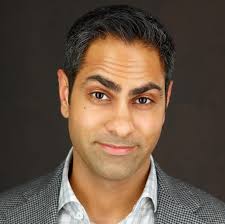
Ramit Sethi Ramit Sethi is the best-selling author of I Will Teach You To Be Rich, and now writes for over 1 million readers every month. He focuses on business, careers, negotiation, and psychology.

Earlier this week, I came across an article written by Ramit, titled Why Successful People Take 10 Years to ‘Succeed Overnight’.

Ramit started his personal-finance blog in 2004, while he was still in college. For the first three years, he made no money at all. Ten years later, in 2014, he had his first $5 million dollar week! Today, his “hobby blog” is a multi-million dollar business.

When new business owners ask Ramit for advice, he recommends his Domino Strategy:

First, start so small that you can easily knock over the first domino.

For example, the first step in starting a business is to brainstorm the business idea.

Second, put the dominoes in just the right sequence so that each small step makes the next, bigger step possible.

The second step in starting a business is to find one paying customer to test if the idea has potential. Your initial plan should be to get one customer, not 10,000 customers. Once you have the first customer, you can start planning how to get five customers, etc.

If you start small and level up slowly, you’ll never think to yourself, “I don’t have time or money to do this.”

Ramit Sethi is so awesome!

You can read the whole article at Why Successful People Take 10 Years to ‘Succeed Overnight’.

I also encourage you to visit Ramit’s website at www.iwillteachyoutoberich.com.

Kevin Kruse Crushes Time Management

Posted on 08.04.16 | dianahhale |

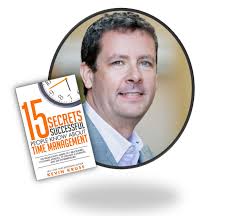
Kevin KruseKevin Kruse is a New York Times bestselling author, Forbes contributor, and keynote speaker. He is a recognized expert in the field of productivity.

Kevin has advised Fortune 500 CEOs, Marine Corps generals, and members of Congress. But he was not always so successful.

Kevin started his first company when he was 22 years old. He couldn’t afford both an apartment and an office, so he rented an office, slept under his desk, and showered every day at the YMCA.

Kevin tried one business model after another, including selling software, creating computer games, and building computers for sale. Although he worked as hard as he could, nothing succeeded. A year later, his company had failed and he was deeply in debt.

Kevin learned two important lessons. The first lesson was that hard work does not necessarily lead to success. (Can you think of an example of this?)

The second lesson was that he had been chasing multiple random product ideas without any focus, and it just wasn’t effective.

Kevin realized that what he needed to do was to focus and dedicate himself to a single target market. Once he made this shift, his business began to take off.

Today Kevin is a top performance productivity expert, with multiple income streams.

Kevin Kruse was recently interviewed by one of my favorite bloggers, John Lee Dumas, and you can access the interview here.

Kevin is the author of 15 Secrets Successful People Know About Time Management: The Productivity Habits of 7 Billionaires, 13 Olympic Athletes, 29 Straight-A Students, and 239 Entrepreneurs.

One of my favorite tips from Kevin’s book is to throw away your “To Do” list and schedule all of your tasks on your calendar.

Hal Elrod’s Miracle Morning

Posted on 07.20.16 | dianahhale |

Hal ElrodHal Elrod, author of the best-selling book The Miracle Morning, says that he created the Miracle Morning routine after hitting “rock bottom” for the second time in his life.

The first “rock bottom” experience happened when Hal was only 20 years old. He was working in sales, and became one of the top sales reps in the history of his company.

One night, after giving a motivational speech to his fellow sales reps, he was struck head-on by a drunk driver going the wrong direction on the freeway at 70 miles an hour. The left side of his body was crushed and his heart stopped beating. However, his life was saved and he was rushed to the hospital, where he remained in a coma for six days.

When Hal woke up, doctors told his family that he had permanent brain damage and would never walk again. But Hal proved them wrong! Not only did he learn to walk again, but he went on to become an ultra-marathon runner. He also went back to work. His experience led to a successful career as a life coach, a motivational speaker, and a best-selling author.

Hal’s second “rock bottom” experience happened when the economy crashed. He slowly lost his business and his house, and accumulated $50,000 worth of credit card debt. For the first time in his life, he was depressed.

One day, Hal heard a quote by the late motivational speaker Jim Rohn: “Your level of success will rarely exceed your level of self-development, because success is something you attract by the person you become.”

Hearing that quote became the catalyst that turned Hal’s life around. He realized that if he wanted to reach a high level of success, he would need to devote time each day to becoming the person capable of that level of success.

Hal developed the Miracle Morning routine that he still practices today. He believes that it sets your mindset for the rest of the day. It is all about getting up early and starting your day in a focused, goal-oriented, and productive manner. It is about self-discipline.

I started the Miracle Morning routine several months ago, and it is the best thing you can do for yourself! Give it a try!

Face it, Embrace it, Defy it, and Conquer it!

Posted on 07.17.16 | dianahhale |

Victoria ArlenThis morning, Pastor Joel Osteen told the most amazing story! It was the story of Victoria Arlen.
 
Victoria was active and healthy until she was eleven years old, when she developed a pain in her side. Her doctors removed her appendix, but that didn’t help.
 
Victoria’s health continued to deteriorate. She lost 30 pounds in just three weeks. Her arms and legs stopped working. She lost the ability to speak, eat, and walk. Eventually she became unable to move at all, and slipped into a vegetative state.
 
Victoria was diagnosed with a rare autoimmune disorder that was causing pressure on her brain and spinal cord. Victoria’s doctors told her parents that she was unlikely to survive. If she did survive, they believed that she would live her life in a vegetative state.
 
Two years later, Victoria “woke up” and became aware of what was going on around her, although she remained unable to speak or move. Eventually she was able to open her eyes, and began to recover.
 
In 2010, four years after her diagnosis, Victoria returned to school. She was paralyzed from the waist down, but grateful for her recovery. She was told that she would never walk again.
 
In March 2016, Victoria defied the odds again, and took her first steps. She can now walk normally, and no longer needs a wheelchair or even crutches.
 
Today, at age 21, Victoria Arlen is one of ESPN’s youngest on-air personalities! She is also an actress, a model, and a motivational speaker!
 
You can learn more about Victoria Arlen on her website at VictoriaArlen.com

Tragedy to Triumph

Posted on 07.14.16 | dianahhale |

Amy PurdyAmy Purdy was 19 years old when she started having flu-like symptoms one day. The following day she was in the hospital on life support with a 2% chance of survival.
 
Amy had contracted bacterial meningitis. She went into septic shock less than 24 hours later. Both of her legs had to be amputated below the knee. She lost both kidneys, and her spleen had to be removed. She also lost all of the hearing of her left ear.
 
Amy beat the odds and recovered. She challenged herself to move on with her life, and to reach goals that anyone would struggle to achieve. She became one of the top ranked adaptive snowboarders in the world.
 
In the spring of 2014, Amy inspired millions of fans with her performances on ABC’s Dancing With The Stars. During the 2015 Super Bowl, she was featured in a commercial for Toyota. Later in 2015, her book “On My Own Two Feet” became a New York Times best-seller. Currently, she is a motivational speaker who is invited to share her wisdom with audiences around the world.
 
I love Amy Purdy’s story! We never know what the future holds for us. How we prepare for it, and respond to it, is up to us.
 

The School of Greatness

Posted on 07.07.16 | dianahhale |

Lewis HowesI am a huge fan of Lewis Howes!

Lewis is a former professional football player and two sport All American. After a sports injury forced him to give up playing football, he turned his attention to the business world.

Lewis hosts The School of Greatness Podcast, which has been downloaded millions of times. Each episode introduces an inspiring person or message. It is one of the most uplifting podcasts I have ever found.

Some of my favorite episodes of The School of Greatness Podcast have featured Tony Robbins, Elizabeth Gilbert, and Jack Canfield. Lewis concludes each episode by asking his guest, “What does “greatness” mean to you?

Lewis has also written a New York Times best-selling book titled The School of Greatness, in which he shares the essential tips and habits he has gathered by interviewing guests on his popular podcast. I read it earlier this year and thought it was excellent.

You can learn more about Lewis Howes at his website.

What does “greatness” mean to you?

Youtube Sensation Shay Carl

Posted on 07.01.16 | dianahhale |

Shay Carl Shay Carl is one super-interesting guy! I love his story!

Tim Ferriss posted a three-hour interview with Shay Carl on his podcast this week, and I didn’t think it was long enough! I listened to it twice.

A manual laborer for years, Shay Carl posted his first video on youtube while on break at his job installing granite counter tops.

Today, Shay Carl’s full time job is posting daily videos of his family life. Sound boring? Not even. Check out his Shaytards Youtube Channel, which now has over 2.3 billion views! He also co-founded Maker Studios, which was sold to Disney in 2015 for almost $1 billion dollars! His latest project is the Trixin Clothing Line, which is also a family business.

One of his favorite books is As a Man Thinketh by James Allen. He talked about his belief that you can do anything you want to if you create it in your mind first. By the same token, if you are always thinking negative thoughts and dwelling on bad things, that is what is going to appear in your life. You have to control and focus your mind.

I liked Shay’s story about how he lost 100 pounds. He did it by deciding to run the Los Angeles Marathon and visualizing it. He lost the weight by eating fruits and vegetables, biking, and running. He hesitated to tell his audience how he did it, because it seemed too simplistic and cliche. But that is what worked! There are no magic tips or tricks. He has since run several other marathons.

He talked about how it is human nature to take the path of least resistance and do the easy thing. For example, it is easy to stay in bed instead of getting up at 5:00 to work out. It is easy to go through the drive through, and pick up a Big Mac. It is easy to slip into bad habits, and then before you know it, they own you. That is why you need to decide what you want to do ahead of time, and to keep your mind focused on what you want to achieve.

I highly recommend listening to the whole interview on the Tim Ferriss Blog.

The End of Jobs

Posted on 06.28.16 | dianahhale |

Taylor PearsonI was fascinated by Taylor Pearson’s self-published book, The End of Jobs, so I was pretty excited when Taylor was interviewed by one of my favorite podcasters, John Lee Dumas.

The premise of the book is basically that the century-long growth in wages earned from jobs came to an end in the year 2000. Technology and globalization have changed everything. Jobs are more competitive, less safe, and less profitable than ever. However, technology has also made entrepreneurship safer, more accessible, and more profitable than ever.

The End of Jobs has sold so well that Taylor is basically living on the income generated from this single self-published book.

John Lee Dumas and Taylor Pearson are living examples of the premise of the book!

  • Page 1
  • Page 2
  • Go to Next Page »

sidebar

Blog Sidebar

Thanks for visiting my personal blog!

I write about entrepreneurs, thought leaders, and other highly creative people.

Every human being is creative! What do you want to create in your life?

What is your message or your mission?

DIANA H HALE
1755 Telstar Drive, Suite 300
Colorado Springs, CO 80920
Dir.: (719) 623-5822
Fax.: (888) 552-6580
TwitterGoogle +LinkedinInstagram

Copyright 2023 Diana H. Hale


Loading Comments...