• Skip to primary navigation
  • Skip to main content
  • Skip to primary sidebar

DianaHale

  • HOME
  • ABOUT
  • BLOG
  • CONTACT

Life Hacks

Malcolm Gladwell’s Master Class

Posted on 04.23.18 | dianahhale |

Malcolm GladwellHave you seen the advertisements for the website masterclass.com? I loved the concept when I first noticed it.

Imagine learning acting from Samuel L. Jackson, tennis from Serena Williams, or cooking from Wolfgang Puck. When I saw that Malcolm Gladwell had a writing course on the site, I knew I wanted to take it.

You probably know that Malcolm Gladwell is the author of several bestselling books, including The Tipping Point, Blink, The Outliers, and David and Goliath. He has been a staff writer for The New Yorker since 1996. I have always been fascinated by his ability to think outside the box.

If you have any interest in writing nonfiction, Malcolm Gladwell’s master class is worth your time. I watched all 24 lessons in one day, while furiously typing notes. It was like sitting with him in his Manhattan apartment while he talked about his writing process and his experiences. My favorite lessons were the ones where he described his interviewing style and his story-telling techniques.

One thing I like about the masterclass.com website is the option to upload video questions for the instructor. I also liked the course outline that was provided for download.

Take a look at masterclass.com. I know you will find something you want to explore.

Ray Dalio’s Principles

Posted on 04.11.18 | dianahhale |

Ray Dalio PrinciplesRay Dalio is the founder and chair of BridgeWater Associates, the largest and most successful hedge fund in the world.  It manages $150 billion in assets globally.

I loved his TED Talk in April 2017.  and recently heard him interviewed on one of my favorite podcasts, The James Altucher Show.

Now that he has built a personal net worth of over $17 billion, Ray has turned his attention to helping others. In his new book, Principles, he outlines the formula he used to guide his company to massive success. It is a hefty tome of almost 600 pages, but well worth the time it takes to read it. I have summarized the major points below.

Life Principles

  1. Embrace reality and deal with it. – Be a hyper realist. Adapt through trial and error. Evolve. Weigh the consequences. Own your outcomes.
  2. Use the 5-step process to get what you want out of life. – (1) Have clear goals. (2) Identify problems and refuse to tolerate them. (3) Be radically open-minded. (4) Understand that people are wired differently. (5) Learn how to make decisions effectively.
  3. Be radically open-minded. – Sincerely believe that you might not know the best possible path. Your ability to deal with “not knowing” is more important than what you do know.
  4. Understand that people are wired very differently. – Getting the right people in the right roles in support of your goal is the key to succeeding at whatever you choose to accomplish.
  5. Learn how to make decisions effectively. – Recognize that (1) the biggest threat to good decision making is harmful emotions, and (2) decision making is a two-step process (first learning and then deciding).

Work Principles

To Get the Culture Right . . .

  1. Trust in radical truth and transparency ­– You have nothing to fear from knowing the truth. Have integrity and demand it from others. Be radically transparent.
  2. Cultivate meaningful work and meaningful relationships – Be loyal to the common mission. Be crystal clear about what the deal is. Treasure honorable people who are capable.
  3. Create a culture in which it is okay to make mistakes, and and unacceptable not to learn from them – Recognize that mistakes are part of the evolutionary process. Know which types of mistakes are acceptable, and which types are unacceptable.
  4. Get and stay in sync – Recognize that conflicts are essential to great relationships. Know how to get in sync and disagree well. If you find you can’t reconcile major differences, consider whether the relationship is worth preserving
  5. Believability-weight your decision making – Listen to everyone, but give greater weight to those with demonstrably more knowledge and success. Find the most believable people possible who disagree with you and try to understand their reasoning. Understand how people came by their opinions.
  6. Recognize how to get beyond disagreements – Use your principles to guide your resolutions. Don’t resolve crucial matters through compromise. Seek the best solutions by using principles-driven decision-making, but then expect everyone to get behind decisions once made.

To Get the People Right . . .

  1. Remember that the ‘who’ is more important than the ‘what’ – Determine who will take responsibility. Choose the right people; hold them accountable.
  2. Hire right, because the penalties for hiring wrong are huge. – Match the person to the design. Remember that people are built very differently and that different ways of seeing and thinking make people suitable for different jobs. Don’t hire people just to fit the first job they will do; hire people you want to share your life with.
  3. Constantly train, test, evaluate and sort people – Move people around, assess them, and give them feedback. Stretch them through trial and error to learn what they do best and under what conditions. Know their strong and weak points. Develop and place them accordingly. Remove people who fail to perform.

To Build and Evolve Your Machine . . .

  1. Improve management of your machines – The better you know your systems, the more easily you can diagnose issues and solve them. Gauge your machines’ health by their outputs. Tweak the system constantly to optimize it – and the people behind it.
  2. Perceive and don’t tolerate problems – Treat problems as opportunities to improve. Use your natural anxieties to anticipate and fix things before they do damage.
  3. Diagnose problems to get at the root causes – Identify specific problems and the people accountable for them. Get to root causes by asking questions that dig below the surface, layer by layer.
  4. Make improvements to fix problems – After you diagnose the problem and its causes, design appropriate, specific solutions. Control for unintended consequences, and adjust for proper goal alignment.
  5. Do what you set out to do – Generating ideas and vision may get the glory, but the hard work of execution matters. Wherever possible, pursue what people want to do, and prioritize those challenges accordingly.
  6. Use tools and protocols to shape how work is done – Turn execution into habits. Use systems, tools, principles and processes to guide people. Use algorithms to computerize your best decision processes and principles.
  7. Don’t overlook governance – Put rules, procedures and decision-making processes in place so people have a voice for their ideas and advice. Clarify who makes the final decision. Build in clear decision accountability.

A Gratitude Practice to Resolve Internal Conflict

Posted on 09.19.16 | dianahhale |

tony-robbinsI am a huge fan of Tim Ferriss’s blog and podcast!

A few weeks ago, Tim posted an interview with Tony Robbins, the nationally recognized life coach.

During the interview, Tony talked about the fact that most people have unfinished business in lives. They have a conflict in their lives with a situation or person that is so stressful that they have never been able to resolve it. He walked through a science-based guided meditation that anyone can use to resolve these conflicts.

Tony’s guided meditation was so popular with podcast listeners that Tim Ferriss decided to post it as a stand-alone audio file. I tried it myself, and thought it was great!

You can access the guided meditation here: Tony Robbins on How to Resolve Internal Conflict

Your Not To Do List: Nine Habits To Stop Now

Posted on 08.13.16 | dianahhale |

Tim FerrissI am a huge fan of Tim Ferriss, bestselling author of The 4-Hour Workweek, and an extremely successful blogger.

Today I came across an article about him on the Inc Magazine website, titled 19 Things Really Productive People Refuse to Do (According to Tim Ferriss and His Readers).

The article reminded me of one of Tim’s excellent blog posts, titled The Not-To-Do List: 9 Habits to Stop Now.

Anyone who follows Tim’s work knows that he puts in twelve-hour workdays, not four-hour workweeks. His book is about eliminating what distracts you from moving toward your most important goals, not about slacking off.

I will give you Tim Ferriss’s  list of nine habits to stop now. You can read the whole article on the Tim Ferriss Show website.

  1. Do not answer calls from unrecognized phone numbers
  2. Do not check e-mail first thing in the morning or last thing at night
  3. Do not agree to meetings or calls with no clear agenda or end time
  4. Do not let people ramble
  5. Do not check e-mail constantly — “batch” and check at set times only
  6. Do not over-communicate with low-profit, high-maintenance customers
  7. Do not work more to fix overwhelm — instead prioritize
  8. Do not carry a smart phone 24/7
  9. Do not expect work to fill a void that non-work relationships and activities should fill

You can read more articles about Tim Ferriss at his website.

Productivity Hack: The Pomodoro Technique

Posted on 08.10.16 | dianahhale |

PomodoroThe Pomodoro Technique is a time management technique that was named after the cute tomato-shaped kitchen timer.  “Pomodoro” is the Italian word for “tomato.”

It is simple.  When you have a large task to complete, you break it down into timed intervals (called “Pomodoros”), with short breaks between the intervals.

The technique trains your brain to focus intensely for short periods.  Over time it can actually improve your attention span and ability to concentrate.

How to do The Pomodoro Technique:

  1. Choose a task to be accomplished.
  2. Set your timer to 25 minutes.
  3. Work on the task until the timer rings, and check off the task.
  4. Take a 5-minute break
  5. After every four Pomodoros, take a 30-minute break.

Each Pomodoro is a unit of work. If you are distracted by a phone call, meeting, or emergency, you either end the Pomodoro, or postpone the distraction until the Pomodoro is complete.

If you can post-pone the interruption, try this strategy:

  1. Inform the distracting party that you are busy working on something.
  2. Negotiate a time when you can get back to the person about the issue.
  3. Schedule the follow-up time with them.
  4. Call the other party back when your Pomodoro is complete.

The technique is not rigid. If you are making headway when the timer goes off, it is fine to pause the timer, finish what you are doing, and then take your break.

The goal is to help you focus, while keeping in mind that regular breaks are important for your productivity.

You will be surprised by the amount of progress you can make by using this technique!

You can learn more about the Pomodoro Technique at the The Pomodoro Technique Blog

Is Action The Key to Everything?

Posted on 08.08.16 | dianahhale |

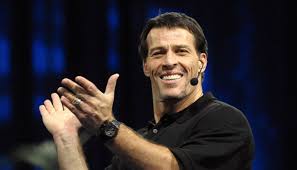
Tony RobbinsYou have probably heard of Tony Robbins, the charismatic high-energy self-improvement guru. He has been preaching the gospel of “personal power” for decades.

Today I came across a short video of Tony Robbins talking about how his work has evolved over the decades.

Tony said that he started his career with the simple message that “action is the key to everything.” Even if you take the wrong action, he believes that you can succeed at anything, as long as you keep adjusting your approach.

However, most people live in their heads. They have goals and dreams that they are excited about, but they fail to execute a plan to reach them. That is why the need for massive action is still a big part of Tony’s message.

However, over the years, Tony has come to realize that 80% of success is psychological, and only 20% is about the mechanics of executing the plan.

Tony explains that we all have a mental blueprint of our beliefs. This blueprint was developed years ago. Sometimes our blueprint empowers us, but often it creates limitations that we are not even aware of. For example, we may subconsciously believe “I shouldn’t earn more than my parents,” or “I can’t be successful because people will judge me.”

These inner conflicts cause us to pull back from reaching our goals. We might come close to reaching an important goal, and then suddenly screw it up. It is as though we self-sabotage our own success. This is because our blueprint is creating limitations.

Tony now believes that psychology is the major driving force that leads to success in reaching big goals.

You can watch Tony Robbins’ video on the Inc. Magazine website by clicking here.

How To Create An Action Plan To Achieve Your SMART Goal

Posted on 08.07.16 | dianahhale |

ActionSetting a SMART goal is a great place to start, but to achieve  it you will need an action plan.

Great action plans have three elements:

  • They outline the actions you will need to take.
  • They identify potential challenges and obstacles.
  • They identify solutions to those challenges and obstacles.

Design The Action Plan

  • Brainstorm a list of at least 20 actions you could take that would help you reach your goal.
  • Highlight the action steps that you will absolutely need to take to achieve your goal.
  • Arrange your action steps into a logical or sequential order.
  • Review this list to determine if there are any ways to simplify it further.

Anticipate Challenges

  • List every possible challenge or obstacle that could hinder your progress toward your goal.
  • These may include “reasons” or “excuses” why you can’t execute your Action Plan.
  • List as many as you can.

Brainstorm Possible Solutions

  • For each challenge or obstacle, brainstorm as many ways to overcome it as possible.
  • You will probably be surprised how many solutions you can come up with.
  • List as many as you can.

As you implement your Action Plan, and evaluate your progress, you may need to make adjustments!

SMART Goals

Posted on 08.06.16 | dianahhale |

Smart goalsPeople who set goals tend to be more productive. They also tend to be wealthier and more successful in their professional lives.

The key to effective goal-setting is to precisely define your goals. SMART goals can help you do it!

S.M.A.R.T. is an acronym that stands for: Specific, Measurable, Attainable, Relevant and Time-Based.

S: Specific

  • It is important to be specific when you define your goal, so that you know when you have achieved your goal.
  • What exactly do you want to accomplish?  Why do you want to accomplish this goal?

M: Measurable

  • You need to be able to measure progress toward your goal.
  • How many pounds are you going to lose?  How many miles are you going to run?

A: Attainable

  • The goal needs to be within your reach and within your control.

R: Relevant

  • The goal should be something that you really desire.  If it is inconsistent with your other desires, you are likely to fail.
  • For example, if you want to get fit on a low carbohydrate diet, but don’t want to stop eating cookies, you are likely to fail.

T: Time-Based

  • The goal should have a specific deadline.  There should be a specific time limit.

S.M.A.R.T. goals are clear and well-defined.  On the date of the deadline, you will know if you have achieved your goal!

Grit: The Power of Passion and Perseverance

Posted on 08.05.16 | dianahhale |

Angela DuckworthAngela Duckworth, Professor of Psychology at the University of Pennsylvania, has spent years analyzing what it takes to be successful.

In her recent book, Grit: The Power of Passion and Perseverance, she makes a convincing argument that it takes much more than talent.  You also need to have grit.

But what is grit?

Angela explains that “grit” is comprised of passion and perseverance.

Passion is what makes your goal fascinating and meaningful for you. It has two elements, which are deep interest and a sense of purpose.

  1. The first element is intense “interest.” Your attention is completely captivated by your goal. There may be aspects of your work that you don’t enjoy, but overall the activity should excite you.  Passion begins with enjoying what you do.
  2. The second element of passion is a sense of “purpose” or meaning. You have a strong sense that what you are doing could benefit other people. It is a feeling of connection to the service of other people.

Perseverance is the drive to keep moving toward your goal. It also has two elements, which are daily practice, and hope or resilience.

  1. The first element is that of “daily practice” or consistency. Without discipline and effort, initial talent will never develop into something fruitful.  Every day you work to get better than you were the day before. You are constantly moving forward and progressing.
  2. The second element of perseverance is “hope or resilience.” This is the feeling that you can and will overcome all adversity, setbacks, and failures.  It is the feeling that your goals are within reach.

Angela Duckworth has found that people with these characteristics reach their goals more often than people who do not.

You can learn more about Angela Duckworth at her website or by listening to her TED talk.

The Miracle Morning Routine

Posted on 07.21.16 | dianahhale |

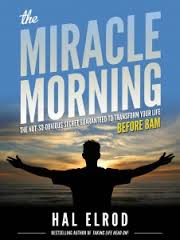
Miracle MorningYesterday I talked about Hal Elrod, author of the Miracle Morning. Today, I will tell you what the Miracle Morning routine is.

The Miracle Morning routine consists of six daily practices, which Hal Elrod refers to as Life SAVERS. This is an acronym for Silence, Affirmations, Visualization, Exercise, Reading, and Scribing.

Silence
Some of my favorite activities for this practice are meditation, prayer, deep breathing, and gratitude. If you have trouble meditating, you can try using a guided meditation. Kelly Howell has produced a wide assortment of guided meditation MP3s. You can also use one of the meditation Apps. I have heard good things about the Headspace App, but have not used it personally.

Affirmations
Affirmations are powerful tools, if they are phrased correctly. Lying to yourself doesn’t work, so repeating affirmations like “I am a billionaire” or “I have the perfect body” generally fail. Instead, try affirmations about actions you can control, such as “I am committed to running three miles every morning” or “I am committed to writing a blog post by the end of the day.”

Visualization
I like to visualize my day, seeing myself doing the activities I have scheduled on my calendar, and getting good results! I have used vision boards in the past, but seem to lose interest in them pretty quickly. However, I know that many people have great success with that technique, and there are several free Apps for creating virtual vision boards.

Exercise
The important thing is to get moving and raise your energy level. You can even do something as simple as a few push-ups or yoga stretches when you get out of bed in the morning. Sometimes I will drive to the gym at 5:00 a.m., but it is usually more efficient for me to do a short workout at home in the morning, and save the gym for the evening.

Reading
Hal’s recommendation is to read personal growth books. It has never been easier, since so many books are available in audio format. Often I will listen to a motivational speaker, like Joel Osteen. I also love business podcasts, and my favorite one is the Tim Ferriss Show. I get lots of great ideas from TED talks, which you can download from ITunes.

Scribing
Writing or journaling is a way to process thoughts or reflect on your life. The Five Minute Journal is a good option because it keeps you focused on the positive and it only takes a few minutes.

I really believe that focused, productive, successful mornings generate focused, productive, successful days. The Miracle Morning routine is a big part of that. Give it a try!

  • Page 1
  • Page 2
  • Go to Next Page »

sidebar

Blog Sidebar

Thanks for visiting my personal blog!

I write about entrepreneurs, thought leaders, and other highly creative people.

Every human being is creative! What do you want to create in your life?

What is your message or your mission?

DIANA H HALE
1755 Telstar Drive, Suite 300
Colorado Springs, CO 80920
Dir.: (719) 623-5822
Fax.: (888) 552-6580
TwitterGoogle +LinkedinInstagram

Copyright 2023 Diana H. Hale


Loading Comments...